
Back
Open vs Closed Modular Kitchens: Best Fit for You?
Discover which kitchen layout suits your lifestyle: "Open vs Closed Modular Kitchens: Which Works Best?" Explore design options with the home factory.
From kitchens to wardrobes, bring your ideas to life with a bespoke design crafted just for you.
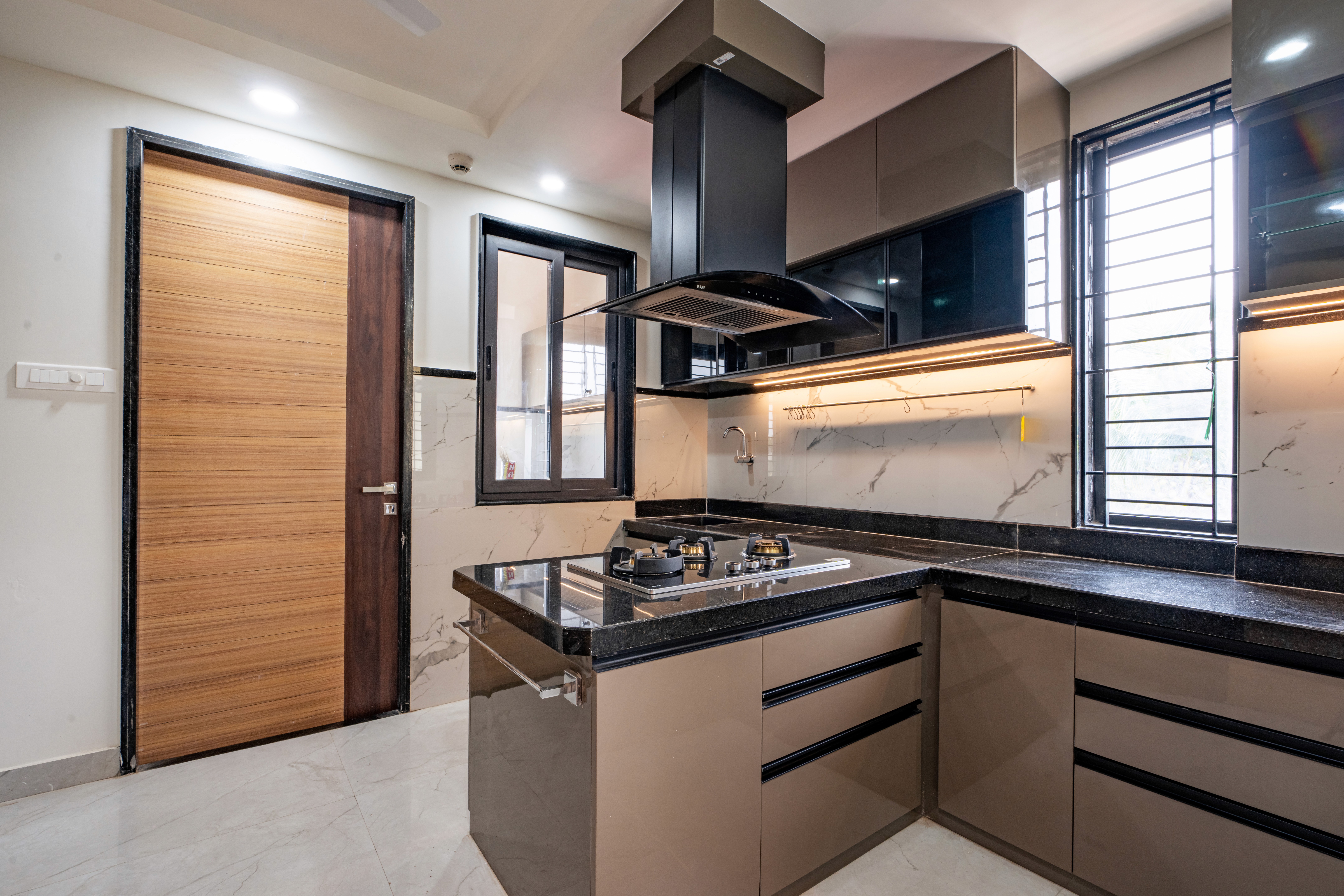
Have you ever been stuck in the kitchen, feeling completely cut off from the party happening just one room away? That single wall—or lack thereof—is at the heart of one of the most important decisions you can make for your home: choosing between an open or closed kitchen layout. The term “modular” simply means the kitchen is assembled from factory-finished units, like high-end LEGOs. This results in a faster installation with consistent quality. This choice is about more than looks—it’s about lifestyle. Your decision will shape social gatherings, contain cooking smells, manage daily clutter, and define how your home feels every day.
The Open Kitchen: Is a Social, Airy Space Right for You?
The biggest appeal of an open kitchen design is purely social. It removes the wall between cooking and living, letting you chat with guests or keep an eye on the kids while you prep dinner. This layout is also a master of illusion when it comes to space perception; by eliminating visual barriers, it allows light to flow freely and can make a smaller home feel wonderfully airy and expansive. For anyone who loves multitasking or hosting, the social benefits of an open concept kitchen are hard to beat.
The trade-off, however, is that there’s nowhere to hide a mess. That pile of pans from dinner or the blender you left out becomes part of your living room decor. This constant exposure is what designers call visual clutter. Maintaining a clean open plan kitchen requires a "clean-as-you-go" mindset. If the thought of your cooking chaos being on display sounds stressful, a traditional layout might be a better fit.
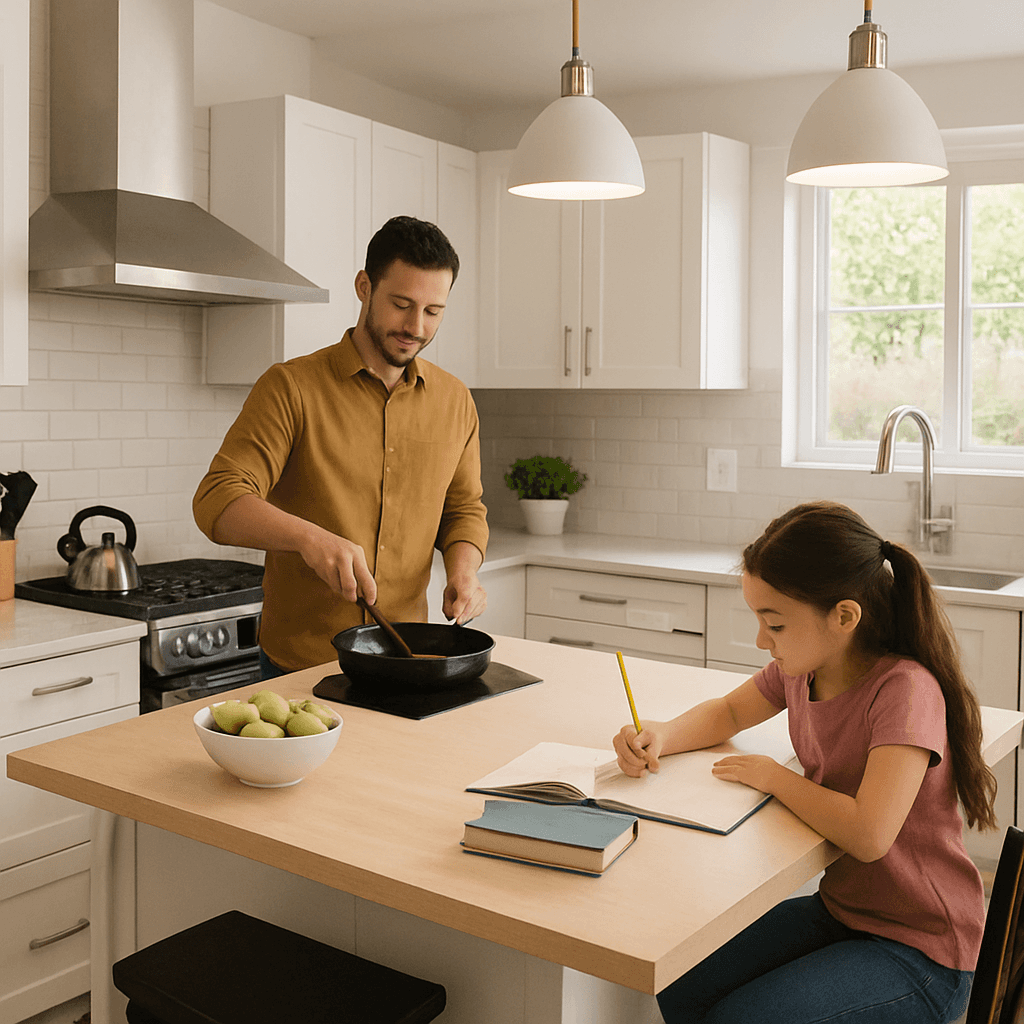
The Closed Kitchen: Why a Private Cooking Haven Still Makes Sense
On the other side of the coin is the traditional closed kitchen a room that acts as your private culinary command center. Its greatest strength is containment. Think about the potent smell of frying bacon or a spicy curry; with a closed kitchen, those powerful aromas stay confined instead of clinging to your living room sofa. The same principle applies to noise isolation. The whir of the mixer and the clatter of pots are neatly separated, creating a more peaceful home environment for everyone else.
Beyond just smells and sounds, a closed kitchen offers the glorious ability to shut the door on a mess. This is the ultimate tool for mess containment. After hosting a dinner party, you can leave the cleanup for later without the pile of dishes staring at you from the couch. This separation provides a focused, distraction-free zone for serious cooks and makes relaxing post-meal a genuine possibility.
The Head-to-Head Battle: How Open and Closed Kitchens Handle Mess, Noise, and Smells
The right choice often comes down to how you handle three everyday realities: mess, noise, and smells. Here's how they compare:
Mess: In an open kitchen, a few dirty dishes make your whole living area feel cluttered. A closed kitchen lets you shut the door on the problem.
Noise: With no walls to stop it, the sound of a blender or dishwasher becomes the soundtrack to your movie night in an open layout. In a closed kitchen, the noise stays put.
Smells: That delicious garlic-heavy dish can linger on your sofa for days in an open plan. A closed kitchen traps those aromas, for better or worse.
These trade-offs don’t have to be deal-breakers. If you love the airy feel of an open kitchen, you can manage the downsides. When shopping for appliances like dishwashers or chimneys, look for their decibel (dB) rating—a lower number means a quieter home. For those who prefer a closed kitchen, powerful ventilation is key. Investing in a good quality chimney or exhaust fan is non-negotiable for clearing fumes and keeping the air fresh.
What's the Real Cost Difference Between Open and Closed Kitchens?
You might assume that removing a wall is cheaper than building a kitchen within existing ones, but creating an open-plan space can be surprisingly expensive. The major hidden cost comes down to one crucial question: is the wall you want to remove "load-bearing," meaning it's helping to hold up your house? Knocking one down isn't a simple sledgehammer job; it often requires a structural engineer to design new supports, adding thousands to your budget.
Beyond that potential expense, you'll also need to factor in the cost of creating a seamless look. This includes matching flooring and paint between the kitchen and living areas so the combined space feels cohesive. To avoid a budget shock, ask your contractor for a separate quote specifically for any wall removal. This will reveal the true cost difference and help you decide if that open feeling is worth the price.
Can You Get the Best of Both Worlds? Smart Ideas for a Semi-Open Kitchen
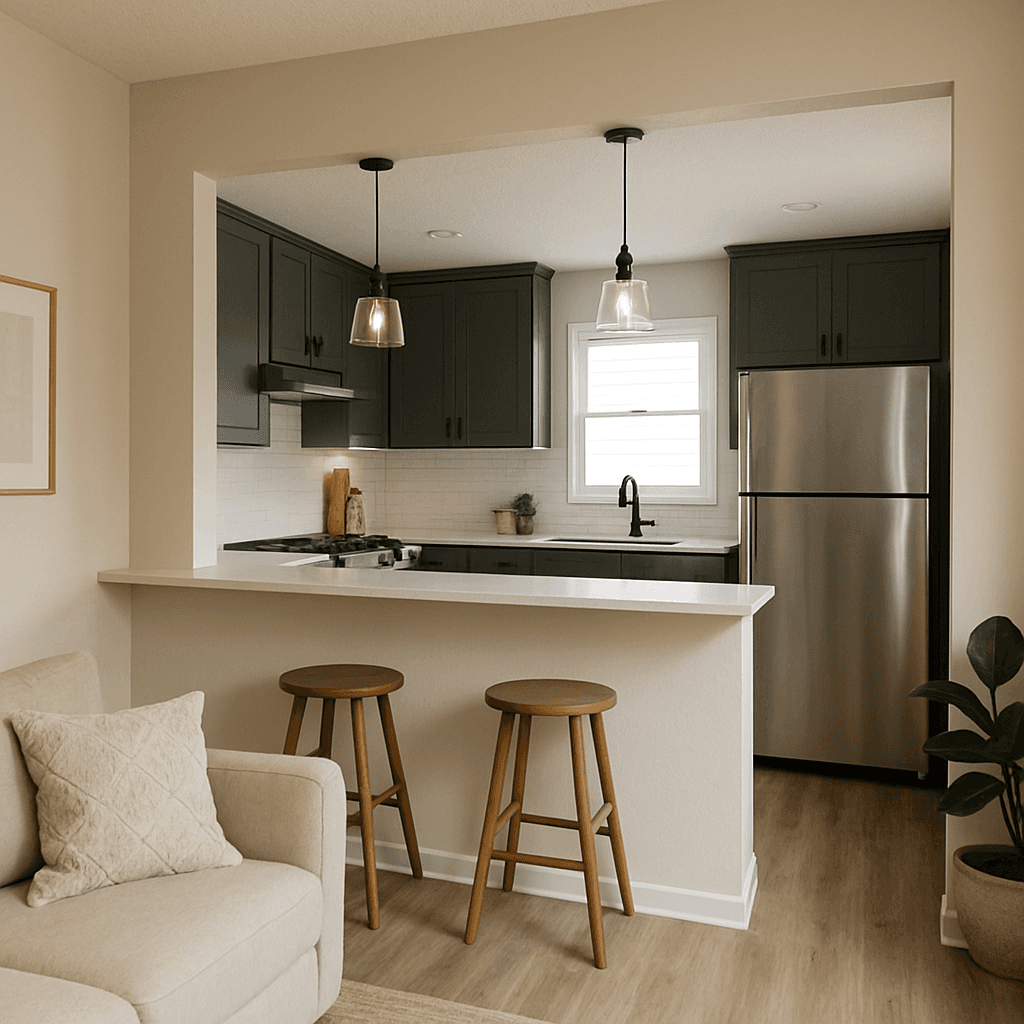
Thankfully, you don’t have to choose between a fortress and a fishbowl. The answer is a semi-open kitchen, a clever compromise that keeps you connected without exposing every stray pot and pan. Think of it as creating a large visual link between rooms. Design ideas like stylish glass partitions or a wide pass-through window can define the space, block some noise, and still maintain an airy feel, making them great kitchen and living room partition ideas.
Perhaps the most popular approach is a breakfast bar built on a half-wall. This setup is brilliant because the wall hides the prep mess on your counters from anyone on the couch, while the open space above lets you chat with family and guests. It’s the perfect way to enjoy the social benefits of an open kitchen while keeping a little bit of clutter out of sight.
The Final Verdict: A 4-Question Checklist to Choose Your Perfect Kitchen
By visualizing how each layout will impact your daily life from containing cooking smells to creating a social hub—you can make a confident choice you won’t regret.
Ultimately, choosing a kitchen layout comes down to what you value most. Here’s a quick check to find your perfect fit:
Your Cooking Style: Are you a 'clean-as-you-go' person or a 'creative mess' cook?
Your Social Life: Do you host casual hangouts or formal dinners?
Your Tolerance Level: How much do kitchen noises and smells bother you during relaxation time?
Your Priority: Is a feeling of spaciousness (often the best kitchen layout for small Indian homes) more important than hiding clutter?
Your honest answers not fleeting trendsw ill build the kitchen you'll love for years to come.
Visit thehomefactory.in for more updates
Fastest design delivery
Access 80+ brand partners
Happiness Guaranteed


